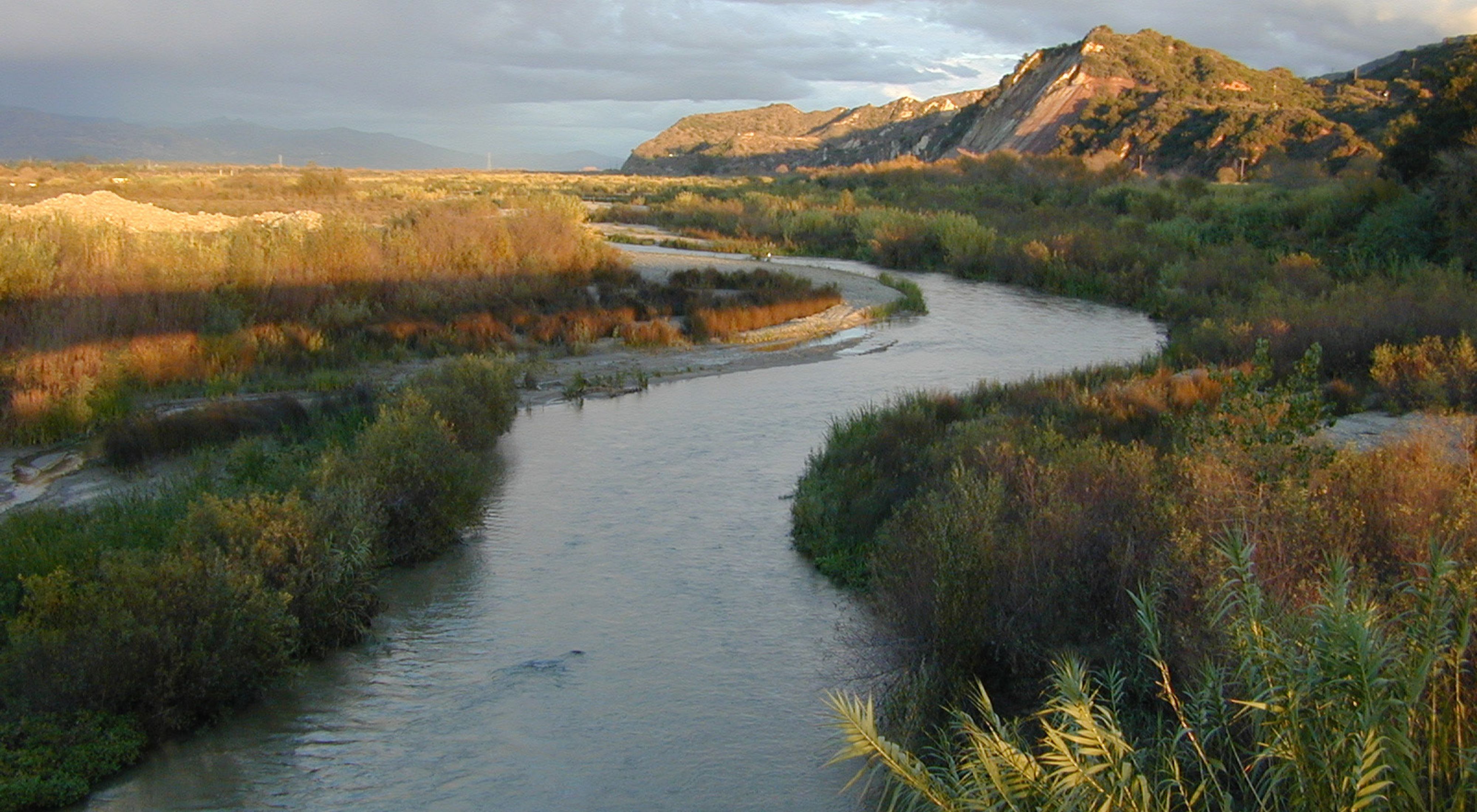
The Watershed-Wide Arundo Management, or WWAM, group was developed by multiple entities including local governments, academic researchers, nonprofits, and stakeholders with the immediate goal of removing Arundo, and other invasive species where practical, in the Santa Clara River and its tributaries. This program aims to remove Arundo and restore ecosystem functions in the Santa Clara River watershed by creating a framework to facilitate collaboration among stakeholders to achieve this goal. This critical step will lead to a comprehensive restoration program consistent with the below values:
- Create a framework to connect stakeholders and coordinate actions to remove Arundo from, and restore native biota to, the Santa Clara River watershed
- Protect, conserve and augment local water-supply and increase local water sustainability
- Protect and improve water quality
- Protect communities, properties, infrastructure, and the environment from natural disasters such as wildfires and floods
- Sustain and restore natural ecosystem function to support native riparian and aquatic inhabitants, particularly sensitive and special status species
- Promote convenient recreational access to nature for the community
- Engage with public and educational groups regarding the biodiversity and ecological relationships associated with the Santa Clara River
- Prepare for and adapt to climate change
Restoration in Action
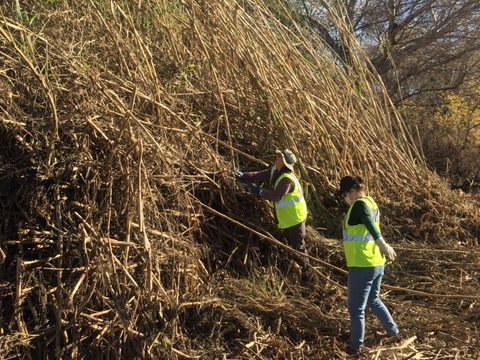
Credit: RIVRLab, UC Santa Barbara
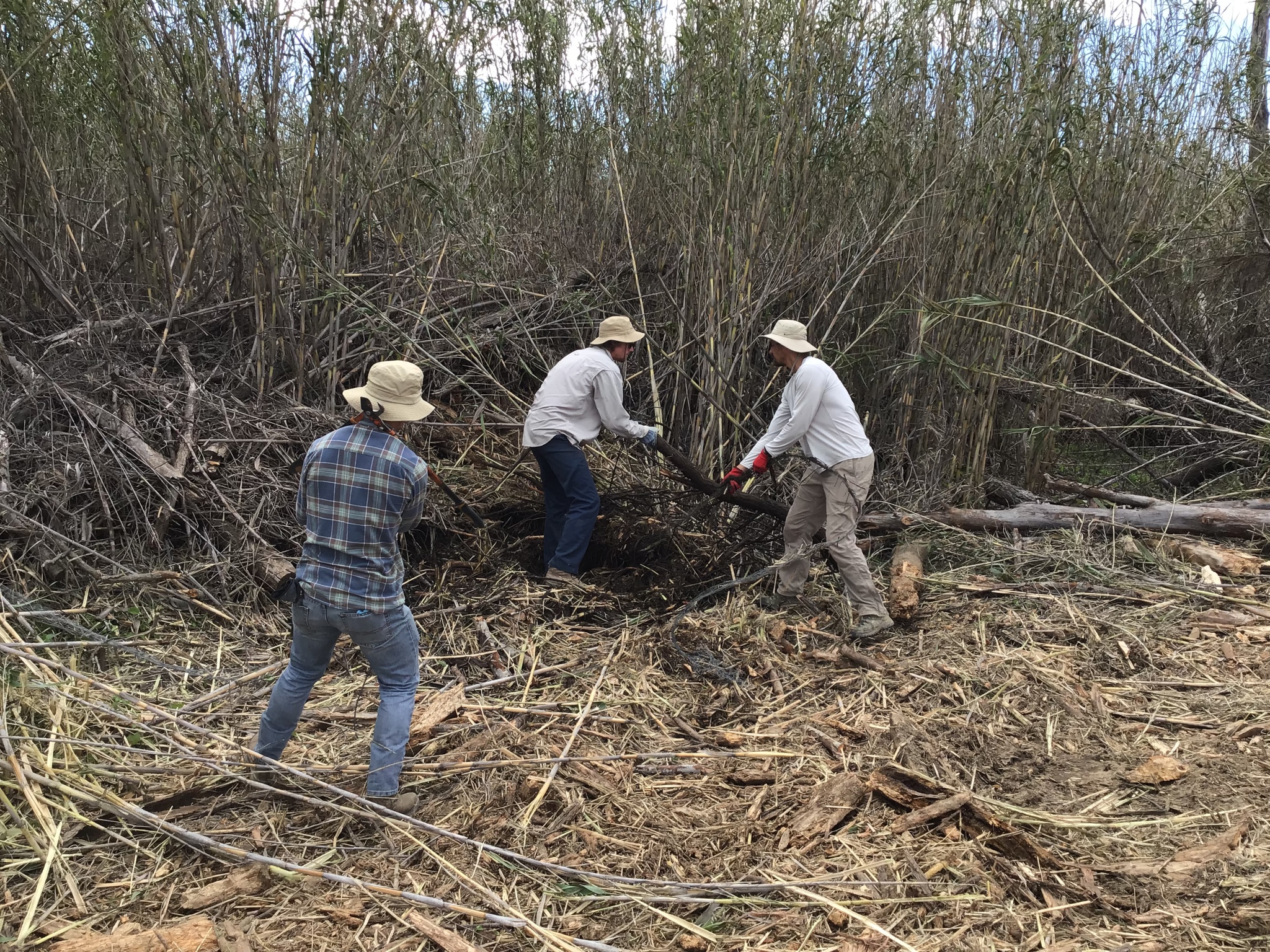
Credit: RIVRLab, UC Santa Barbara

Credit: RIVRLab, UC Santa Barbara
Why is it important to remove Arundo watershed wide?
The Watershed Wide Arundo Management (WWAM) program is an innovative approach to removing noxious invasive plants from the Santa Clara River watershed. This program will establish a management, prioritization and tracking system and then offer a regional approach for removing Arundo and restoring riparian ecosystems. If funded, the program will develop a comprehensive process to prioritize removal and management to reduce these threats. It is important to examine the entire watershed as a whole because Arundo reproduces from rhizomes (massive, shallow root systems) that are transported downstream by flows to new locations where they re-root and create new stands. The strategy is to systemically target high-priority Arundo infestations for removal where they pose greatest risk to resources (for instance, by fueling wildfires that could kill fire-sensitive native overstory trees, or where high erosion threats are found), ultimately removing all Arundo. The program includes the following steps.
- Process and analyze existing remote sensing information including Light Detection And Ranging (LiDAR) data and multispectral aerial imagery, to map current vegetation status, characterize distribution of non-native (and native) vegetation, and provide topographical representation of channel form and floodplain landforms in the Santa Clara River and surrounding areas, with in-person site surveys to validate the remote data. On-the-ground site surveys would validate remote sensing data and allow sampling of physical traits such as soil and moisture conditions that can influence restoration success.
- Create a tool to guide site prioritization for Arundo removal for watershed partners.
- Once sites are prioritized and mapped, this project will then implement Arundo removal in areas of the greatest benefit and restore native habitat and ecosystem functions to protect wildlife species and native biodiversity. This is where the project needs substantial financial support.
Currently there is initial funding for 1) and 2) above, but the program needs extensive financial support to complete this critical and desperately needed project for the Santa Clara River watershed.
How To Get Involved
For more information, please contact us here or email us at WWAMinfo@gmail.com.
Organizational Support
- Santa Clara River Watershed Committee and Invasive Weed Task Force
- Santa Clara River Steelhead Coalition / California Trout
- Friends of Santa Clara River
- Ventura Audubon Society
- Sierra Club
- California Native Plant Society
- Western Foundation of Vertebrate Zoology
- Channel Islands Restoration
- UCLA Institute of the Environment and Sustainability
- UCSB Cheadle Center for Biodiversity and Ecological Restoration
- Santa Clarita Valley Water Agency
- The Nature Conservancy
- County of Ventura Board of Supervisors, Kelly Long, Carmen Ramirez, David LaVere
- Ventura County Public Works Agency – Watershed Protection, Ventura County Fire District, Ventura County Office of Emergency Services
- Farm Bureau of Ventura County
- John Lloyd-Butler Ranch, LLC
- State Senator Steve Bennet, State Assemblywoman Monique Limon
- Santa Clara River Conservancy
- City of Santa Clarita
- Ventura County Resources Conservation District
- Restoration Sciences, LLC
- Stillwater Sciences
- Watersheds Coalition of Ventura County IRWM Program (regional collaborative)
 Restoring the Santa Clara River